
PM Narendra Modi Chairs High-Level Security Meeting to Review Impact of West Asia Conflict
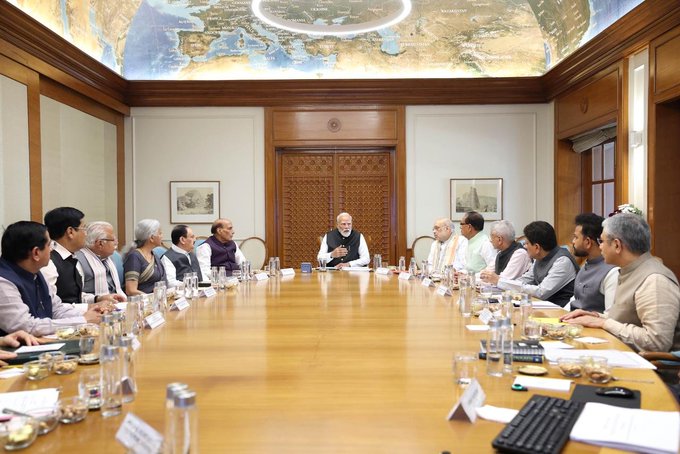
Image Source : @narendramodi
Dated 23rd March 2026
TDF News Desk
New Delhi | Prime Minister Narendra Modi chaired an important meeting of the Cabinet Committee on Security (CCS) on 22nd March 2026 to review the situation arising from the ongoing conflict in West Asia and its possible impact on India.
During the meeting, the Cabinet Secretary gave a detailed presentation on the global situation and the steps already taken by different Ministries and Departments of the Government of India. Future plans to handle the situation were also discussed.
The meeting covered the possible impact of the conflict on several important sectors such as agriculture, fertilisers, food security, petroleum, power, MSMEs, exports, shipping, trade, finance and supply chains. The overall economic situation of the country and further steps required were also reviewed.
Officials also discussed how the ongoing conflict in West Asia could affect the global economy in the short, medium and long term, and what measures India should take to handle these challenges.
Special focus was given to ensuring the availability of essential items for the common people, including food, energy and fuel. The government discussed detailed plans to make sure that these essential needs remain available without interruption.
The meeting also reviewed the possible impact on farmers, especially their need for fertilisers for the upcoming Kharif season. Officials said that the steps taken in the past few years to maintain enough fertiliser stock will help ensure timely supply and support food security in the country. The government also discussed finding alternative sources of fertilisers to avoid any shortage in the future.
The committee noted that sufficient coal stock is available at power plants across the country. This will help ensure that there is no shortage of electricity in India despite the global situation.
Discussions were also held on reducing dependence on limited import sources for important sectors like chemicals, pharmaceuticals and petrochemicals. At the same time, the government is planning to identify new export markets to promote Indian goods and strengthen trade.
Various ministries have proposed several measures to deal with the situation. These steps will be finalised and implemented in the coming days after proper consultation with all stakeholders.
Narendra Modi directed that a special group of ministers and senior officials be formed to work in a coordinated “whole of government” approach to handle the situation. He also instructed that sector-wise groups should work closely with all stakeholders to ensure effective planning and implementation.
The Prime Minister said that the conflict in West Asia is an evolving situation and is affecting countries across the world. He stressed that all possible efforts must be made to protect citizens from its impact. He directed all departments to work together to ensure minimum inconvenience to the public.
Prime Minister also emphasised the need for proper coordination with state governments to prevent black-marketing and hoarding of essential commodities.
The Government of India has assured that it is closely monitoring the situation and taking all necessary steps to safeguard the interests of the country and its citizens. With timely action and coordinated efforts, India aims to minimise the impact of the global crisis and ensure stability in essential supplies and services.